English
 Arabic
 Chinese (Simplified)
 Dutch
 French
 German
 Italian
 Portuguese
 Russian
 Spanish

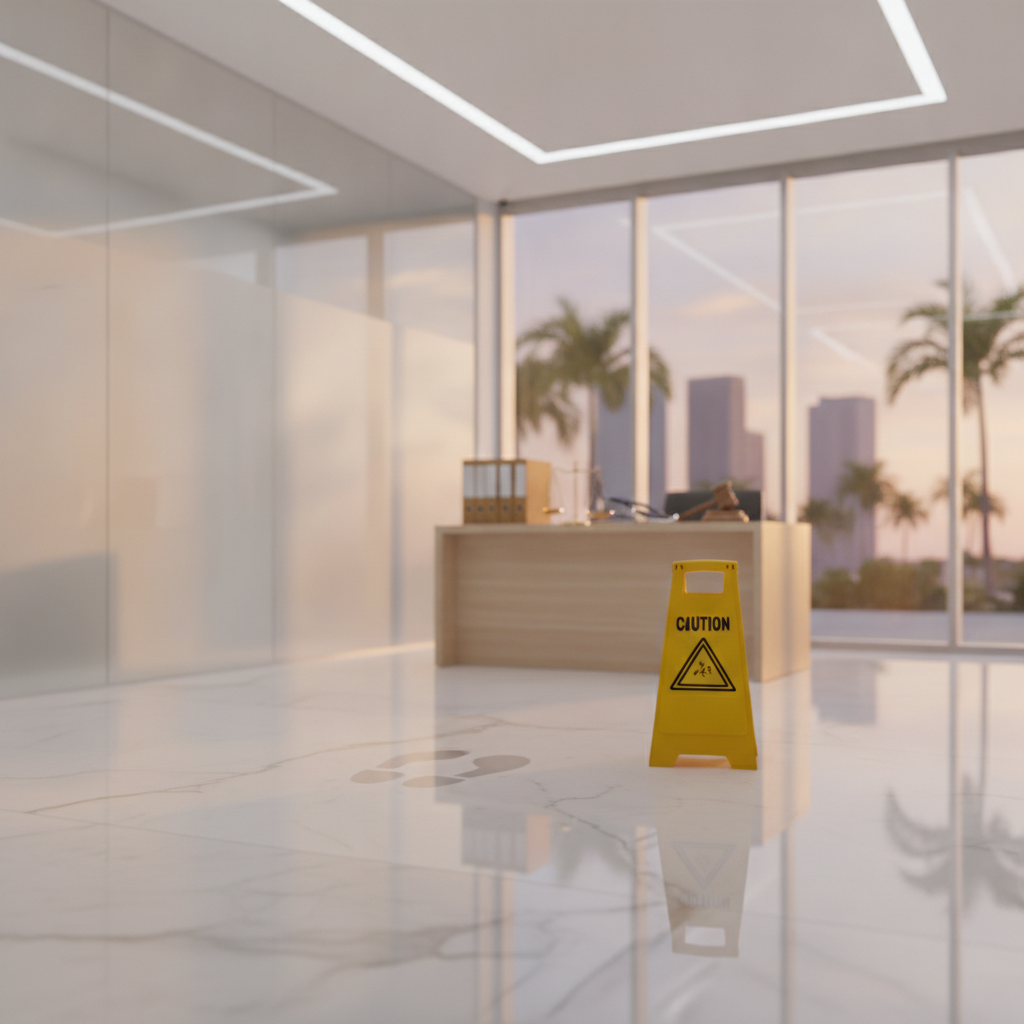
Imagine you slip on a slick patch of floor in a shopping center, and later you learn that three other customers went down in the exact same spot over the past year. That detail changes everything. It suggests the hazard was not a freak occurrence but a known, recurring problem. When you talk with a slip and fall lawyer Miami residents rely on, one of the first questions you will likely hear is whether anyone else has been hurt there before.
Prior similar accidents are one of the more powerful, and often overlooked, pieces of evidence in a premises liability claim. They can show that a property owner had notice of a dangerous condition, that the risk was foreseeable, and that doing nothing was a choice rather than an oversight. Florida law generally requires owners to keep their premises reasonably safe for visitors and to warn of hazards they know about or should have discovered through reasonable care.
In this guide, we walk through how earlier incidents work as evidence, what counts as truly similar, where to find proof of them, and what limits apply. Whether you run a small business worried about liability, manage properties, or were hurt yourself, understanding this concept helps you see how these cases are built and defended. Keep in mind that every situation is different, and this article is general information rather than legal advice.
Why Earlier Accidents Matter in a Fall Case
At the heart of most fall claims is a simple question: did the property owner know, or should they have known, about the danger? Prior accidents speak directly to that question. If several people were injured by the same loose railing or the same leaking pipe, it becomes much harder for an owner to claim surprise. The history of the hazard tells a story that a single incident never could.
This is why experienced counsel, such as a Miami FL slip and fall attorney, often begins an investigation by asking about the property’s incident history rather than only focusing on the day of your fall. Patterns reveal what a one-time snapshot cannot.
Prior accidents can support several parts of a claim at once. They can suggest the condition was dangerous, show that the owner was on notice, and indicate that the risk was foreseeable and therefore preventable. Of course, they are not a guarantee of success. A court still decides whether the earlier events were genuinely comparable and whether the evidence can be admitted. But when the facts line up, a documented pattern can shift the balance of a negotiation or a trial in a meaningful way.
How Notice Works Under Florida Premises Law
Florida generally recognizes two kinds of notice: actual and constructive. Actual notice means the owner or an employee personally knew about the hazard. Constructive notice means the condition existed long enough, or occurred often enough, that a reasonably careful owner would have discovered it. Prior accidents can help establish either kind.
Consider a restaurant where servers repeatedly report a drip from an overhead air conditioning unit. If a guest later falls in that same spot, the earlier reports serve as proof of actual notice. In another scenario, a hazard may recur so regularly that staff should have anticipated it, such as a doorway that floods every time it rains. The pattern itself supports constructive notice.
Florida also has specific statutory rules for certain fall claims involving transitory foreign substances in business establishments, which can place additional burdens on the injured person to show the owner’s actual or constructive knowledge. Because those rules are technical and can change, anyone dealing with a spill-related fall should have the current law reviewed by a licensed attorney. Prior incidents are frequently part of how that knowledge gets demonstrated in practice.
What Makes an Earlier Incident Truly Similar
Not every past injury helps. Courts tend to look for substantial similarity between the earlier event and yours. A customer who tripped over a cracked parking lot curb five years ago says little about a wet lobby floor today. The closer the match in cause, location, and conditions, the more useful the earlier accident becomes.
Factors that commonly matter include the type of hazard, the physical location on the property, the surface or fixture involved, the weather or cleaning conditions at the time, and how recently the earlier incident occurred. A fall on the same staircase with the same missing grip strips is far more persuasive than a fall elsewhere in the building for an unrelated reason.
Timing matters too. An incident that happened last month carries more weight than one from a decade ago, especially if the property has since been renovated. Defense teams often argue that conditions have changed and that older events are irrelevant. A thoughtful slip and fall lawyer Miami families consult will weigh these arguments early and decide which earlier incidents are strong enough to feature in a claim.
Where Records of Past Accidents Come From
Proof of earlier incidents rarely appears on its own. It has to be found, and the sources vary. Property owners and managers frequently keep internal incident reports, maintenance logs, and complaint files. Insurance carriers may hold claim histories tied to the premises. Even informal records, like emails between staff about a recurring problem, can matter.
Outside the property itself, other sources can fill in the picture. Emergency response records may show repeated calls to the same address. Local code enforcement files can document violations or complaints. Prior lawsuits, if any, are often searchable through public court records. Former employees and regular customers sometimes recall accidents that never made it into a formal report.
Gathering these materials usually involves a formal request during the litigation process, since owners are not required to hand over damaging information voluntarily. This falls within the broader field of Personal Injury practice, where evidence development is often what separates a speculative claim from a well-supported one. If you suspect others were hurt before you, write down anything you know, including names, dates, and what you heard, so it can be followed up.
Using Video and Digital Footage to Spot Patterns
Modern properties are often covered by cameras, and that footage can reveal more than a single fall. Reviewing recordings from days or weeks before your accident may show other visitors stumbling, catching themselves, or nearly falling in the same place. These near misses are not injuries, but they can still demonstrate that the condition was obviously hazardous and visible to anyone paying attention.
Footage can also show how staff responded, or failed to respond. If employees walked past a spill several times without cleaning it, that behavior speaks to notice and reasonable care. The challenge is timing, since many systems overwrite recordings after a short period. Acting quickly to request preservation of the footage can make the difference between having this evidence and losing it forever.
We cover this topic in more depth in How Surveillance Video Can Strengthen a Miami Slip and Fall Claim, which explains what to ask for and why delay can be costly. For now, the key point is that video can connect your fall to a broader pattern, turning an isolated event into part of a documented history.
Comparing Types of Evidence at a Glance
Different kinds of proof carry different weight, and each has its own strengths and weaknesses. The table below gives a general overview of how common categories of earlier-incident evidence tend to be used. It is a simplified guide, not a prediction of how any particular case will turn out.
| Evidence Type | What It Can Show | Common Limitation |
|---|---|---|
| Internal incident reports | Owner knowledge of earlier falls | May be incomplete or never created |
| Maintenance and repair logs | Repeated problems and delayed fixes | Entries may be vague |
| Surveillance footage | Near misses and staff responses | Often overwritten quickly |
| Prior lawsuits or claims | Documented history of similar injuries | Must be substantially similar |
| Witness accounts | Informal knowledge of recurring hazards | Memories fade or conflict |
How Property Owners Typically Push Back
Defense lawyers know how persuasive a pattern can be, so they often work to limit or exclude it. A common argument is that the earlier incidents were too different to be relevant. They may point to a different time of day, different weather, or a repair made in between. If a judge agrees, the jury may never hear about the earlier events.
Another approach is to downplay the earlier accidents as unrelated to any defect. An owner might say a prior customer fell because they were distracted or wearing unsuitable shoes, not because of the floor. This turns the earlier incident into evidence about personal carelessness rather than property danger.
Owners may also argue that they acted reasonably, perhaps by posting a warning sign or scheduling regular inspections. The question then becomes whether those steps were truly adequate given what the earlier incidents revealed. Anticipating these responses is part of building a claim. Strong cases usually pair prior-incident evidence with other proof, like photographs, witness statements, and maintenance records, so the argument does not rest on a single fragile piece.
Practical Steps If You Think Others Were Hurt Before
If you were injured and suspect the hazard had caused trouble before, a few practical steps can protect your position. Start by documenting the scene as soon as it is safe to do so, taking photographs of the exact spot, the surface, and any warning signs or lack of them. Note the date, time, and conditions.
- Ask nearby employees or customers whether they have seen similar accidents, and record names and contact details if they are willing to share.
- Write down your own recollection while it is fresh, including anything staff said after your fall.
- Request a copy of any incident report the business prepared, and keep your own record of the request.
- Seek medical attention promptly, since treatment records tie your injuries to the event.
- Avoid posting details about the accident on social media, where comments can be taken out of context.
None of this replaces legal guidance, but it preserves information that can be hard to recover later.
Lessons for Small Business Owners and Managers
If you operate a business or manage property, the same principles work in reverse. A thorough record of incidents, repairs, and inspections is not just paperwork. It is a way to show that you take safety seriously and respond when problems appear. Owners who ignore recurring complaints create the very pattern that later becomes evidence against them.
Treat every near miss and minor fall as a signal. Investigate the cause, fix the underlying issue, and document what you did and when. Train staff to report hazards quickly and to place warnings while a repair is pending. Consistency matters, because a single good inspection day does little if the records show months of neglect around it.
Consider reviewing your coverage and procedures with your insurer and a licensed attorney so they reflect current legal expectations. Prevention is almost always less expensive than a dispute. Keeping the premises reasonably safe, and being able to prove it, is the best protection for customers and for the business itself.
Limits and Realistic Expectations
It is worth being honest about what prior accidents can and cannot do. They can strengthen a showing of notice and foreseeability, but they do not automatically establish that the owner is responsible for your injuries. You still need to connect the hazard to your fall and to the harm you suffered.
Florida also applies comparative fault principles, meaning that if a jury finds you were partly responsible, any compensation may be reduced. Evidence of earlier accidents does not erase questions about footwear, attention, or whether a warning was visible. Time limits for filing claims apply as well, and waiting too long can end a case before it begins.
Finally, the availability of records depends on what the owner actually kept and what the law allows to be disclosed. Some earlier incidents will never be documented, and others may be ruled inadmissible. Setting realistic expectations helps you make better decisions, and a candid conversation with an attorney can clarify how strong your particular evidence is.
Finding Local Guidance After a Fall
Every fall case depends on its own facts, and the weight of earlier accidents varies from one property to the next. For residents of Miami, the region’s mix of busy retail centers, older buildings, tropical weather, and crowded tourist areas means that slippery floors and uneven surfaces are a recurring concern. That reality makes it more likely that a given hazard has a history worth uncovering.
When you speak with a lawyer, come prepared with photographs, medical records, and any information you have about other incidents. Ask how they would investigate the property’s history and what they would request from the owner. A clear plan for gathering and presenting that evidence is a good sign of a thoughtful approach.
You do not need to have all the answers before reaching out. Many people only begin to suspect a pattern after they start asking questions. An initial consultation is often the right moment to share what you know, learn what is realistic, and understand the next steps available to you.
The Takeaway
Prior similar accidents can transform how a fall claim is understood. Instead of a single unlucky moment, the injury becomes part of a documented history that points to a known and preventable danger. That shift matters because premises liability turns so heavily on what the owner knew or should have known.
To recap, earlier incidents help show notice and foreseeability, but only when they are substantially similar in cause, location, and conditions. Evidence can come from incident reports, maintenance logs, insurance records, video, public court filings, and witnesses. Owners will often challenge relevance, so strong cases combine several kinds of proof rather than relying on one. Realistic expectations matter too, since comparative fault, filing deadlines, and the limits of available records all shape the outcome.
If you were hurt, act promptly to document the scene, seek medical care, and write down anything you know about other accidents. If you run a business, treat every report and near miss as an opportunity to fix problems before someone else is injured. In both cases, awareness is the starting point. This article offers general information only, and a licensed Florida attorney can evaluate your specific situation and explain how the law applies to your circumstances.

bicouser