English
 Arabic
 Chinese (Simplified)
 Dutch
 French
 German
 Italian
 Portuguese
 Russian
 Spanish

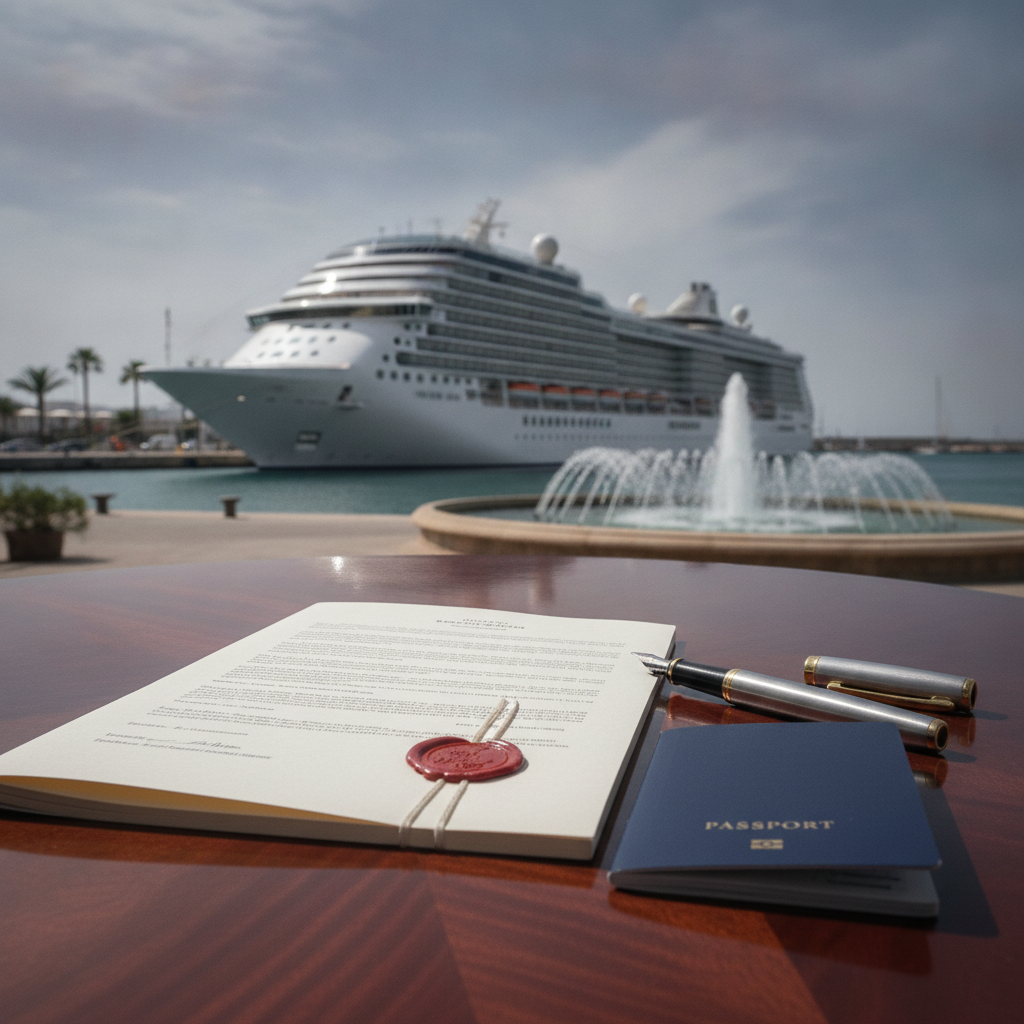
You booked the trip, packed the sunscreen, and never gave a second thought to the long block of fine print attached to your ticket. Then a fall on a slick deck or a mishap in the ship’s gym changed everything. Suddenly the question is not only who caused the injury, but also where you are even allowed to bring a lawsuit. That second question is controlled by a small clause buried in your passenger contract, and it can shape the entire course of your case.
A forum selection clause tells you which court must hear a dispute. Cruise lines draft these provisions carefully, and they almost always choose a courthouse that suits the company rather than the passenger. Many travelers learn about the clause only after they have already hired a lawyer, and some discover it when the cruise line files a motion asking a judge to dismiss or move the case. Understanding how these clauses work, why courts often enforce them, and where they can fail is one of the most practical things an injured passenger can learn.
This guide explains the basics in plain language. Whether you are a small business owner who booked a team retreat at sea, a developer on a long-awaited vacation, or a casual traveler, the same principles apply. A knowledgeable cruise ship negligence lawyer can read your ticket contract, identify the clause, and help you decide the smartest way forward.
What a Forum Selection Clause Actually Says
A forum selection clause is a sentence or two in the passenger ticket contract that designates a specific court, in a specific location, for any lawsuit arising from the voyage. It often reads something like this: all disputes must be filed in the federal court for a named district, to the exclusion of every other court. Cruise lines include it in nearly every ticket because it gives them predictability and lets them concentrate their defense work in one familiar place.
The clause is usually found deep in the terms and conditions, grouped with other provisions about claim notice deadlines and limits on liability. Passengers rarely negotiate it because the ticket is offered on a take-it-or-leave-it basis. If you are unsure whether your contract contains one, read more about how cruise line claims are evaluated and what documents are worth gathering early.
Why Cruise Lines Want to Control Where You Sue
From the cruise line’s perspective, the benefits are obvious. A single designated court means a consistent body of case law, local judges who understand maritime issues, and a legal team that appears there regularly. It also removes the risk that a passenger from a distant state files suit in a courthouse known for generous juries.
For the passenger, the picture looks different. If the clause points to a court far from your home, you may face higher travel costs, difficulty finding local counsel, and added stress while recovering from injuries. The practical effect can be to discourage smaller claims altogether. Some firms, including Goss Law Firm, regularly handle maritime and personal injury matters where the venue question is the first hurdle to clear, so it helps to raise the issue early in any consultation rather than after a deadline has passed.
The Supreme Court Case That Shaped the Rule
The modern rule traces back to a well-known Supreme Court decision involving a cruise passenger who slipped on a deck during a voyage. The passengers’ ticket contained a clause requiring suit to be brought in a particular state. The Court held that such clauses are generally enforceable if they are fundamentally fair, even when the passenger had no chance to bargain over the terms.
The reasoning leaned on practical points. Cruise ships carry passengers from many places, so a single forum reduces the chance of lawsuits scattered across the country. The Court also noted that lower costs for the cruise line can translate into lower fares. Importantly, the decision did not say every clause must be upheld. It left room for challenges based on fraud, lack of fair notice, or a forum so inconvenient that it effectively denies a person their day in court.
Reasonable Notice and the Fine Print Problem
Courts ask whether the passenger had a fair opportunity to learn about the clause before the voyage. This is sometimes called the reasonable communicativeness test. Judges look at how the contract was presented, whether the terms were available before the trip, and how prominently the forum language appeared.
A passenger who received the ticket packet days before sailing, with the clause highlighted or clearly labeled, will have a harder time arguing lack of notice. A passenger who only saw the terms after boarding, or whose contract hid the language in dense, tiny type, may have a better argument. The details matter, so keep every email, confirmation page, and document you received when booking. Screenshots of the online checkout process can also become important evidence if notice becomes a contested issue.
State Court Versus Federal Court
Many clauses require a case to be filed in federal court rather than state court. That choice has real consequences. Federal courts follow their own procedural rules, and judges may apply maritime law differently than a state judge would. Jury pool size, motion practice, and trial timelines can also vary between the two systems.
Passenger injury claims often fall under general maritime law because the incident occurred on navigable waters, which gives federal courts a natural role. Even so, some passengers prefer state court for strategic reasons, and a clause that forces the federal route removes that option. A seasoned attorney weighs these differences before filing so that the venue works with the case theory instead of against it. Knowing the courthouse in advance also helps set realistic expectations about timing and cost.
Forum Clauses Compared to Other Ticket Restrictions
The forum clause is only one of several provisions that can limit a passenger’s options. The table below shows how it fits alongside other common terms found in cruise contracts and what each one typically controls.
| Contract Provision | What It Controls | Why It Matters |
|---|---|---|
| Forum selection clause | Which court hears the case | Affects cost, convenience, and strategy |
| Notice of claim period | Deadline to tell the cruise line about an injury | Missing it can jeopardize the claim |
| Time limit to file suit | How long you have to start a lawsuit | Often shorter than ordinary injury deadlines |
| Choice of law clause | Which legal rules apply | Can change available remedies |
How the Clause Interacts With Filing Deadlines
Venue and timing are closely linked. Many cruise contracts impose a shorter window for filing suit than you might expect from an ordinary injury case, and they may require written notice of the claim within a stated period after the incident. If you file in the wrong court because you overlooked the clause, you could lose valuable time while the case is dismissed or transferred.
That is why the first step after an injury should be a careful review of the contract, not just a quick filing. Write down the date of the incident, the date you received your ticket documents, and the dates of any medical treatment. Deadlines can be unforgiving, and a delay of even a few weeks can complicate matters. Treat the clause and the calendar as a package and plan around both from day one.
When a Court May Refuse to Enforce the Clause
Enforcement is the general rule, but it is not automatic. A court may decline to honor a forum clause if the passenger can show that it was procured through fraud or overreaching, that notice was inadequate, or that enforcing it would be fundamentally unfair. Another recognized ground is that the chosen forum is so remote and burdensome that the passenger would effectively be unable to pursue the claim.
These arguments are fact-heavy and fact-specific. A passenger who is elderly, seriously disabled, or financially unable to travel for litigation may present a stronger case than someone merely inconvenienced. Courts also consider whether the clause was designed to discourage claims rather than to serve a legitimate administrative purpose. Preparing this challenge usually requires medical records, financial information, and a detailed account of how the clause was presented.
Why Local Cruise Hubs Matter for These Claims
Several of the busiest cruise departure ports in the country are in Florida, and many cruise line contracts designate courts in that state. As a result, attorneys based in Miami often see forum selection issues more than lawyers elsewhere. Familiarity with how local federal judges approach venue motions can shape how a response is drafted and which facts are emphasized.
Even if you live far away, working with counsel who regularly appears in the designated court can offset the inconvenience the clause creates. Remote consultations, electronic filings, and virtual hearings have made distance less of a barrier than it once was. The key is choosing a lawyer who already understands the local procedures and can step into the case without a learning curve. That experience often saves both time and money.
Protecting Your Claim Before You Sue
Preparation can make the venue question easier to handle. As soon as you are able, document the injury with photographs, collect names of witnesses, and save every piece of paperwork connected to the booking. Request copies of the incident report and ask the ship’s medical staff for treatment records before you disembark if possible.
The same careful record keeping that helps in other injury cases applies here. For example, understanding how lost income is measured can be valuable if a serious injury keeps you from work, and it is worth reading about Recovering Lost Wages and Future Earning Capacity After a Miami Fall to see how those damages are typically documented. Keep a daily journal of symptoms, missed work, and out-of-pocket costs so nothing is forgotten later.
Comparing Land and Sea Injury Claims
Passengers sometimes assume a cruise injury works like any other premises claim. The legal framework is actually quite different. On land, a property owner’s duties are shaped by state law, and a tenant hurt on rented property may look to the landlord for responsibility, as explained in When a Landlord May Be Liable for Slip and Fall Injuries in a Miami Rental. At sea, maritime principles, the passenger contract, and federal procedure all come into play.
That contrast explains why venue is such a central concern in cruise cases. A land-based injury is usually filed close to where it happened. A cruise injury may occur in international waters, far from any courthouse, which is exactly why the contract fills the gap with a designated forum. Recognizing the difference helps you ask better questions and avoid assumptions that could cost you time.
Practical Steps to Take Right Now
If you were hurt on a cruise, a short checklist can keep you on track while you decide what to do next.
- Obtain and save a complete copy of your passenger ticket contract.
- Highlight the forum selection clause and any claim deadlines.
- Report the injury to the ship in writing and request the incident report.
- Seek medical attention and keep every record and receipt.
- Avoid signing releases or giving recorded statements without advice.
- Consult an attorney before any filing deadline approaches.
The Bottom Line
A forum selection clause may be just a few lines of text, but it can decide where your case is heard, how much it costs to pursue, and sometimes whether it moves forward at all. Courts generally enforce these provisions, yet they are not untouchable. Fair notice, fundamental fairness, and the real-world burden on the passenger all remain valid grounds for a challenge when the facts support it.
The smartest move is to treat the clause as a starting point for strategy, not a dead end. Read your contract promptly, note every deadline, and gather evidence while memories are fresh. Small business owners, developers, and everyday travelers all face the same rules, and none of them should assume the fine print leaves no room to act.
Working with an experienced cruise ship negligence lawyer gives you someone who can interpret the contract, anticipate the cruise line’s motion to dismiss or transfer, and shape your case for the court that will actually hear it. If you or someone you care about was injured at sea, take the venue question seriously from the start. Acting early keeps your options open and puts you in the strongest position to seek the compensation your injuries may warrant.

bicouser
Latest posts by bicouser (see all)
- Food Poisoning on a Cruise: When Contaminated Meals Support a Legal Claim - November 22, 2026